A shocking development reportedly spreading through international diplomatic circles—that Cuba, a symbol of socialism in the Western Hemisphere, is moving toward peacefully submitting to the United States—has sent strong political shockwaves.

Reports that U.S. Secretary of State Marco Rubio has been in direct contact and discussions with Alejandro Castro, the eldest son of Raúl Castro, about a roadmap for a bloodless transition have painted a harsh reality: the so-called “ideal of proletarian revolution,” after more than 70 years, has officially come to an end.
When even a direct descendant of the Castro family—namely Alejandro Castro—must admit that Cuba has run out of options, has no money left, no remaining willpower, and that the socialist path followed for nearly 70 years was merely a period of grave error, it signals a profound collapse.
According to analysts, this is not only Cuba’s story, but also a costly lesson for the leadership in Vietnam.
The most important lesson Hanoi needs to recognize is this: the collapse of what was once portrayed as a glorious past, which Fidel Castro spent his entire life building into an ideologically driven fortress.
But by the time of Fidel’s descendants, that legacy has been reduced to a “tattered realm,” likened to hell itself. The people live in conditions of deprivation never seen before, and the country has become a burden that Fidel’s “heirs” are unable to carry.
When Alejandro Castro bitterly speaks of the disparity in living standards between the two shores of Miami and Havana, Fidel Castro’s grandson is effectively acknowledging the total failure of the Soviet-style centrally planned economic model.
For Vietnam, continuing to rely on past wartime achievements to maintain one-party rule is a strategy that is poorly calculated and fraught with risk.
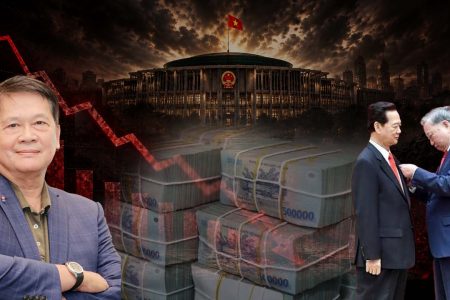
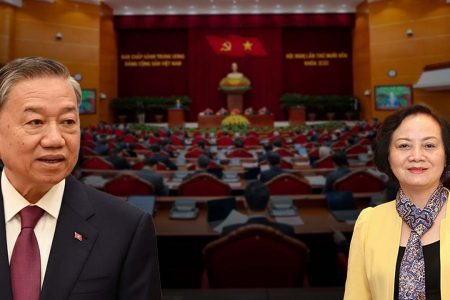
If Tô Lâm and the leadership in Ba Đình do not soon undertake genuine and sweeping reforms by moving away from what the article describes as a reactionary and deeply culpable communist doctrine, in order to bring real prosperity to the country, then the fate of socialist Cuba—where people are exiled within their own homeland in poverty and confinement—may not be a distant prospect for the people of Vietnam.
The second issue is the lesson of adaptability and pragmatism in relations with the United States. Socialist Cuba spent nearly 70 years in hostility only to realize that confrontation with the civilized world leads only to the slow death of a nation.
Alejandro Castro’s proposal for the United States to take over Cuba in a spirit of friendship is portrayed as an unconditional surrender, yet also the most humane solution to save a country that has hit rock bottom in misery.
This places Vietnam’s leadership in a position that demands reflection: does maintaining a one-party political system truly safeguard the nation’s long-term interests, or does it merely prolong the existence of a vested-interest group while waiting for an inevitable internal collapse?
Finally, the “tragic” disintegration of Fidel Castro’s family—with some relatives fleeing to the United States, one son dying by suicide due to depression, and one daughter allegedly having to forge documents and wear a wig to escape to Spain and join anti-communist ranks—
These are presented as proof of the conflict between human instinct and extreme ideology. They expose the hypocrisy of a ruling class that claims to be “proletarian” while living in luxury like an aristocracy.
Cuba’s peaceful “surrender” is a reminder that no fortress is eternal if it is built on the suffering of the people and isolation from the civilized world.
Tô Lâm needs to understand that changing the political system in order to truly integrate is the only way for Vietnam to avoid an “unconditional surrender” like that of Fidel Castro’s relatives; it is the only way to save both himself and the Vietnamese nation.
Tra My – Thoibao.de